


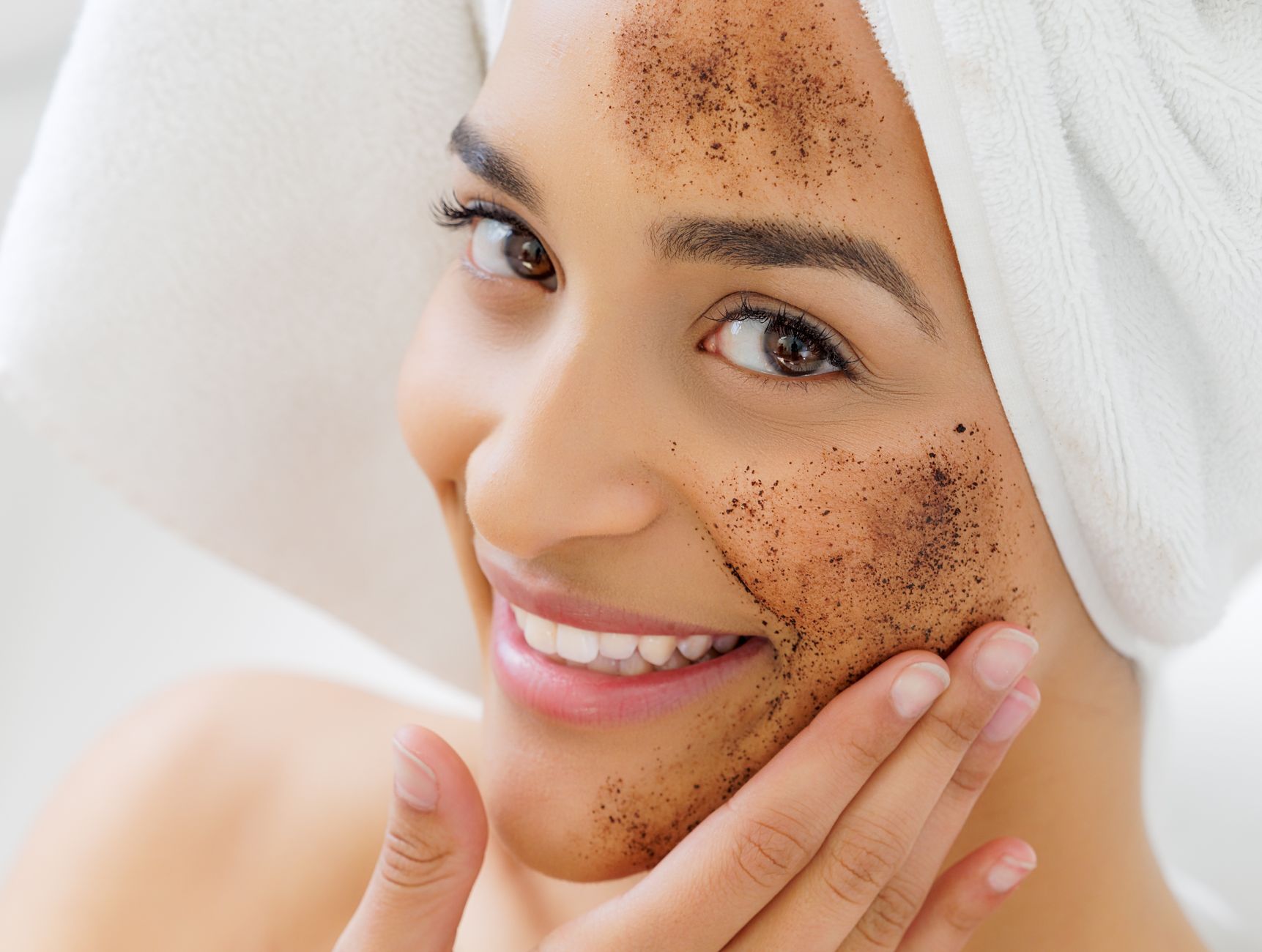
Your skin needs to be exfoliated to get rid of the buildup of dead skin cells and impurities from the skin which might not be achieved using routine cleanser. Now choosing among physical face scrub and chemical exfoliant for exfoliating your skin needs to be addressed. Both methods work for exfoliating the dead skin cells but have a totally different approach.
Face scrubs need to be scrubbed manually while applying friction in order to exfoliate the dead skin cells and use exfoliating agents to exfoliate the impurities. They help in delivering immediate action after scrubbing and give smooth skin.
Chemical exfoliants are a bit of a gentle approach which involve mild chemical acids. These acids work to chemically dissolve the bonds of dead skin cells and help in shedding them from the skin. Some common chemical exfoliants are AHAs, BHAs and PHAs.
Now selecting the right approach for you depends on your skin types, it concerns your skin’s adaptability. An understanding of how each method works helps determine the best approach for your skin.
How do face scrubs work?
Face scrubs use a physical exfoliation method where it needs to be scrubbed on the skin manually to lift off the buildup of dead skin cells and impurities. It works on the surface of the skin to clear out the buildup and does not work on the deeper skin buildup.
They use exfoliating beads or agents to scrub off the impurities from the skin. It is best to use smooth and gentle exfoliators for clearing out the buildup from the skin. It helps in getting a smooth and brightened skin right after cleansing.
They mainly involve exfoliating agents like sugar, coffee grains, salt, microbeads, coconut shell powder or other natural and chemical particles.
How do chemical exfoliants work?
Chemical exfoliation includes some acids which work chemically to break apart the cellular bonds that hold the dead skin cells together. This helps in shedding the buildup of impurities from the skin and also helps in clearing out the buildup from the pores also.
So they work well in gentle exfoliation and do not need to be scrubbed harshly over the skin to clear the buildup. They offer deep cleansing and deliver results slowly but effectively.
Types of chemical exfoliating acids used for exfoliation purpose-
- Alpha hydroxy acids: AHAs are the chemical acids which work on the surface of the skin as they are water soluble in nature. They work to loosen the molecular bonds of dead skin cells and help in clearing them out. Glycolic acid and lactic acid are examples of AHAs.
- Beta hydroxy acids: BHAs are chemical exfoliating agents that can penetrate deep into the pores of the skin because of their lipophilic nature. These oil soluble acids work deep in the pores by cutting the bonds of dead skin cells and other impurities and help in cleansing the skin deeply. Salicylic acid is one of the most effective BHA.
- Poly hydroxy acids: PHA are water soluble chemical acids and they mostly work on the surface of the skin to exfoliate impurities and they have a larger molecular size than AHAs.
Benefits of using a physical face scrub
Face scrubs involve manual scrubbing to exfoliate the dead skin cells and other buildup from the skin. They are a traditional skincare approach for getting rid of dull and uneven skin.
- Face scrubs help in smoothening the rough textured skin and removes the flaky cells right after cleansing.
- Provides a soothing aesthetic feel while scrubbing.
- Helps in stimulating the blood flow to localized cells which helps in providing instant glow for some time.
- They do not incorporate chemical acids which can cause irritation or create inconvenience for some people.
- It works to brighten the skin and fight dullness.
Benefits of incorporating chemical exfoliants
Chemical exfoliants like salicylic acid and glycolic acid help in chemically breaking the bonds of dead skin and help in clearing them out from the skin.
- They help in even cellular shedding from the face.
- They help in chemically preventing the chances of acne breakouts on the skin.
- Helps in clearing out blackheads from the face.
- Helps in fading the pigmentation and accelerating the cellular renewal and sheds pigmented cells.
- Does not need to be scrubbed harshly and does not cause micro-tears.
Disadvantages of face scrubs and chemical exfoliants
Face scrubs
- Some harsh exfoliators with uneven edges can cause micro-tears and purge the skin.
- Delivers uneven exfoliation which makes skin look uneven.
- Can not deliver deep pore cleansing and work on the surface only to clear out the buildup of impurities from the face.
- Harsh exfoliation could often trigger acne breakouts and using these scrubs on active acne leads to inflammation.
Chemical exfoliants
- Some exfoliants might not be suitable for all skin types.
- Higher concentrations of chemical acids can cause skin irritation and stinging.
- Delivers results slowly.
Skin type suitability
- Oily and acne prone skin: Use majorly chemical exfoliators like salicylic acid
- Dry skin: Use mild chemical exfoliators or gentle face scrubs
- Sensitive skin: Use PHAs as they are more safe
- Combination skin: Can use both
Final thoughts
A face scrub is a manual exfoliating agent that needs to be scrubbed while a chemical exfoliant involves chemical breakdown of dead skin cell bonds. Both work well for exfoliation and have different mechanisms. Choosing the best one matters on your skin type and your concerns. You can also use both but in a balanced routine.
