


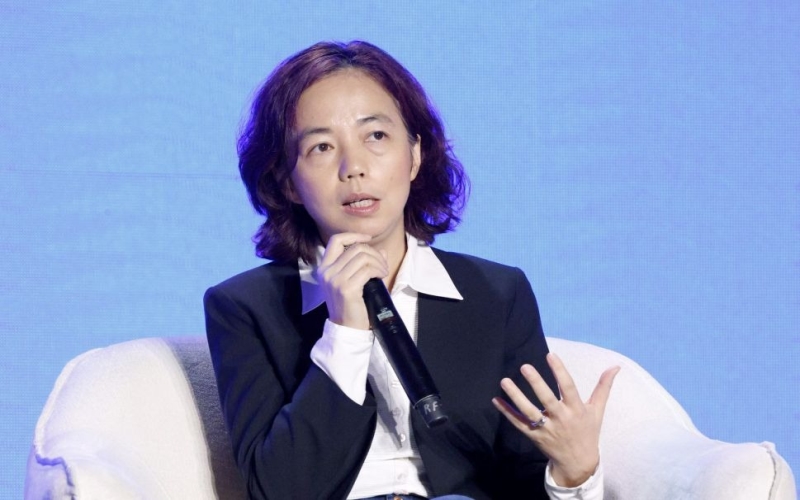
Fei-Fei Li is a name synonymous with artificial intelligence (AI) innovation. Known as the “godmother of AI,” she has played a critical role in advancing machine learning, computer vision, and ethical AI practices. From her pioneering work on ImageNet to her advocacy for human-centered AI, Li has helped shape the modern AI landscape.
This article explores Fei-Fei Li’s career, her contributions to Silicon Valley, and her views on the future of AI, as discussed in recent interviews, including insights from AI expert Hammond.
Early Life and Academic Journey
Fei-Fei Li was born in Beijing, China, and immigrated to the United States as a teenager. She pursued her undergraduate studies at Princeton University, where she earned a degree in physics. However, it was during her PhD at Caltech (California Institute of Technology) that her passion for artificial intelligence and computer vision took root.
Her transition from physics to AI demonstrates her strong interdisciplinary mindset, which later influenced her research into deep learning models and neural networks.
Breakthrough with ImageNet: The Foundation of Modern AI
One of Fei-Fei Li’s most significant contributions to AI was the ImageNet project, which she spearheaded in 2007. This dataset contained millions of labeled images and became the foundation for deep learning advancements.
Impact of ImageNet
- Accelerated Machine Learning Progress: Before ImageNet, AI struggled with image recognition. Li’s dataset enabled researchers to train deep neural networks efficiently.
- Enabled AI Breakthroughs: It played a key role in the emergence of convolutional neural networks (CNNs), which are now widely used in facial recognition, medical imaging, and autonomous vehicles.
- Inspired the AI Boom in Silicon Valley: Companies like Google, Facebook, and Tesla leveraged ImageNet-trained models to build smarter AI systems.
Fei-Fei Li once described ImageNet as “a mirror to the world”, emphasizing its role in helping AI understand visual data as humans do.
Career in Academia and Industry
Fei-Fei Li is not just a researcher; she has been a guiding force in both academia and the tech industry.
Roles in Leading Institutions
- Professor at Stanford University: She serves as the Sequoia Professor of Computer Science at Stanford and was the director of the Stanford AI Lab.
- Chief Scientist of AI at Google Cloud (2017-2018): At Google, she worked on integrating AI into cloud computing, making AI more accessible for businesses.
- Co-Director of the Stanford Human-Centered AI Institute (HAI): Li emphasizes ethical AI development, ensuring that AI serves humanity and not just corporate interests.
Her human-centered approach to AI development is reflected in her initiatives that focus on transparency, fairness, and inclusion in AI research.
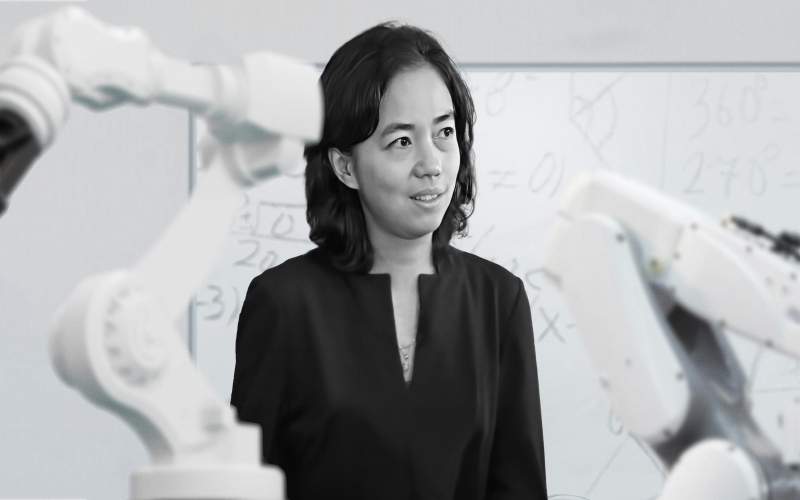
Advocacy for Ethical and Inclusive AI
Fei-Fei Li strongly believes that AI should empower people rather than replace them. She has been a vocal advocate for:
- Diversity in AI: She co-founded AI4ALL, a nonprofit aimed at increasing diversity in AI by providing education and mentorship programs for underrepresented groups.
- Ethical AI: She warns about the dangers of biased AI models and calls for regulations and ethical guidelines.
- AI and Job Market Impact: In a recent interview, she addressed concerns about AI automation, stating:
“AI will not replace humans, but those who use AI will replace those who don’t.”
This highlights the importance of AI literacy for future job markets.
Fei-Fei Li’s Recent Work: World Labs and AI in the Physical World
Recently, Li co-founded World Labs, an AI startup focused on spatial intelligence—a field that aims to help AI understand the 3D world like humans do.
Key Innovations from World Labs
- AI that Interacts with the Physical World: Unlike traditional AI, which processes 2D images and text, Li’s research focuses on machines understanding real-world environments.
- Healthcare Applications: She envisions AI being used for robotic-assisted surgeries and patient monitoring.
- Smart Cities & Autonomous Vehicles: AI-powered perception systems could make cities safer and self-driving cars more efficient.
With $230 million in funding, World Labs has quickly gained traction as a Silicon Valley AI leader.
Future of AI: Fei-Fei Li’s Vision
In her recent discussions and interviews, including insights shared by AI expert Hammond, Fei-Fei Li outlined several key trends in AI’s future:
1. AI and Creativity
She predicts that AI will enhance human creativity rather than replace it. From AI-generated art to personalized music recommendations, machines will work alongside artists and creators.
2. AI in Education
Fei-Fei Li believes AI can personalize learning experiences, helping students based on their strengths and weaknesses. She envisions AI-powered tutors making education more accessible and interactive.
3. AI Regulation and Policy
Li has actively participated in discussions about AI regulation and the need for government oversight. She warns that unregulated AI could lead to societal harm, such as surveillance abuses and privacy violations.
4. Collaboration Between Humans and AI
Instead of viewing AI as a replacement for human intelligence, she sees it as an augmentative tool. Her “Human-Centered AI” approach advocates for AI that works for and with people.
Conclusion: A Leader Shaping AI’s Future
Fei-Fei Li’s journey from an immigrant student to a global AI leader is a testament to perseverance, innovation, and ethical leadership. Her contributions to computer vision, AI ethics, and AI education have left a lasting impact on Silicon Valley and beyond.
